11 January 2013

In the beginning

The universe, Part 3
< How does science work?Series index | From the beginning to atoms >

The beginning of the universe is hidden from us although we know it's about 13.75 billion years old. We can theorise about it using mathematical tools, but we can't see it and we can't measure it. Everything began at that point - space, energy, even time itself.

Maths is an essential tool
We can't see the beginning itself. People sometimes talk about the Big Bang and they imagine a huge explosion crashing out into an empty expanse of endless space.

But that's not right. If you see it in that way you are really not seeing it at all!

Nothing existed before the Big Bang. At least no physical thing that we can see or know inside this universe existed.

There was a singularity, though it's difficult to imagine one of those or what it implies.

  • Time began at the beginning, so before the beginning is meaningless.
  • Space began at the beginning, until then there had been no room in which anything could have existed. There was nowhere to explode into.
  • Energy began then too, beforehand there was no energy.
  • And there was no matter because matter is just condensed energy.
  • Even the laws of physics began at the beginning

Time, space, energy and physics all had their origins at the beginning, and we can't investigate that extraordinary phenomenon - the beginning. We can't see it, we can't visit it, we can't measure it, we can't really imagine it. Not only is it far more extraordinary than we think, it is far more extraordinary than we are able to think.

And perhaps the most amazing thing about the beginning is that eventually we came from it; we are here and are able to think about how extraordinary it all is.

Theoretical problems - It's almost as if the universe doesn't want us to understand its origin. Our best models for the earliest moments of the universe are mathematical. OK, really our only models for this are mathematical.

However there's a serious issue, even with that. If at the beginning the universe was infinitely small then some of the numbers in the models become zero, or they become infinite. Not only does the universe seem to explode, so does the maths.

Maths doesn't always handle zeros and infinities especially well, they can be a problem. It makes mathematical models difficult as we try to apply them closer and closer to the beginning. This is driving some mathematicians and cosmologists to think that there may not be a beginning at all, just a certain minimum size and maximum density before which the universe was larger and, perhaps, time ran the other way. Or something.

Is there room for intelligence? - We can only think about it because we are here. There are no other animals on this planet that even know there was a beginning. We are unique on Earth.

I imagine there must be many other intelligent minds in the universe and it's likely that all of them give some thought to the beginning. Each in their own, unique way no doubt. The fact that there is a beginning is one of the reasons I believe in an even greater intelligence that caused the universe to begin. What is certain is that intelligence is almost inevitable given the properties of the universe, but it couldn't appear until a lot of other things were in place.

But for a moment, let's consider the alternative that the universe has always existed and will always exist with new energy and matter appearing to 'fill the gaps' as it expands. In the 1950s and 60s many cosmologists argued this was the case, it was called the 'Steady State Theory'. But it's since been shown to be incorrect.

But if it was correct I would still feel the need for a first cause, a greater power and intelligence to make it exist. So whether there was a beginning or not, I will still believe in a Creator.

What is the alternative? It's all just causeless?

After the beginning? - But there was a beginning, and we can understand some of the things that happened soon afterwards when the universe, time, space, energy and physics were all very new. And you'll be astounded to learn that we understand some things about it even a tiny fraction of a second after the beginning. A much tinier fraction than you think (unless you're a cosmologist).

It all began roughly 13.75 billion years ago. Our Solar System and this Earth are around 4.5 billion years old or about a third of the age of the universe. The universe was smaller then too.

If you made it this far, congratulations! After this things get easier as the universe grows bigger, older and more familiar. Next time we'll pick up the story at that point where we think we know something, and we'll find out just how awesomely near the beginning that is.


Questions:

  • How comfy are you with the idea of a creative intelligence causing this universe?
  • How comfy are you with the idea of the absence of any such creative intelligence?
  • Does your head hurt yet? Go and get a cup of tea, or coffee, or a glass of wine.

See also:


< How does science work?Series index | From the beginning to atoms >

08 January 2013

Cornerstone - Prayer for St Neots

< 27th May 2012 | Index | 15th January 2013 >

Two of us met at Cornerstone to talk about a Ffald-y-Brenin style house of prayer in St Neots. That's not going to work well with just the two of us so we're interested to meet anyone else who is like-minded. Meanwhile we plan to meet weekly to talk and pray further.

Part of the river front in St Neots
A friend (another Chris) and I met at Cornerstone for coffee yesterday to consider the way forward for a house of prayer for the town. We've discussed this before, last time we met at Costa some weeks before Christmas.

Chris feels quite strongly drawn to the Ffald-y-Brenin approach to the house of prayer, I'm feeling that I'd like to be involved but can't offer a large amount of time as I'm already so busy. We agreed to meet weekly for a time and see how it goes. Today we spent quite a while chatting about the situation and finding out a bit more about one another's views.

We prayed specifically that Father would send workers into the harvest here in St Neots and the area around it. In particular we asked for more people to be sent initially to join us in prayer. We also prayed for blessing on our local area and for protection for Cornerstone in the midst of some difficulties they've faced recently, for the manager Paul and his wife Michelle, for the staff and the volunteers, and for the customers.

Others in the area - If you're reading this, and you live in or near St Neots, and you feel called to pray for the town, please drop me an email - chris@scilla.org.uk . We'd love to meet you!

We also thought about visiting other groups of believers around the town, the Baptists, The River, Open Door, and two of the three Anglican congregations got a mention. I'd like to visit every group in the town. There are at least a dozen of them.

Chris and I plan to meet in Cornerstone again next week, and after that we'll probably decide what to do as we go along. It's going to be an interesting journey of discovery in praying for St Neots.

Questions:

  • Have you read the book about Ffald-y-Brenin ('The Grace Outpouring', link below)?
  • Are you involved in praying for the area where you live?
  • Can you pray out of blessing and call blessing down on those around you?
  • Are you in touch with other groups of believers in your area?

See also:


< 27th May 2012 | Index | 15th January 2013 >

A light on the path

It's important that we serve the community around us, this is how we show people in the world that they are loved. The basis for that loving service is that Christ first loved me, but beyond that he also goes with me and shows me who to speak to, who to bless, and how and when to do it.

A light on the pathJanuary's Synchroblog invitation reads in part as follows.

New Year’s Resolutions are usually somewhat self-serving. But is there a way you can serve others in 2013? Are there homeless people in your community? Maybe you could bring some food to them on a regular basis this year. Are there single mothers? How about coming alongside them to babysit their kids while they go shopping, or maybe you could change the oil in their car or mow their lawn. Do you know any alcoholics or addicts? What can you do to show them love and care this year? Are there elderly shut-ins in your neighborhood? How about running errands for them or going over to their place to play cards, read to them, or just talk?

Serving others - Works of service are important. We are here to serve one another, to serve those around us and to serve the Messiah first and foremost. The people around me can only know that they are loved if they are loved. So yes, I do want to serve the community where I live during the coming year.

But I believe the basis for service is critically important, so rather than resolve here and now what my service will be I plan to write about the basis for serving and how we can consider that and respond to it.

A New Year's resolution by any other name is still a New Year's resolution. And if I resolve to do something, it had better be the right something! All of the suggestions in the Synchroblog notes are great, but doing good things is not sufficient as an end in itself. So what should be the foundation?

Love - The immediate foundation is, I believe, love. If I don't have love, then my actions will be empty at best, or merely for show at worst. I need to step in to help when I see weakness, helplessness, hunger, thirst, injustice, sickness, imprisonment. My heart needs to go out on a daily, even an hourly, basis so that I will respond out of love as and when I witness the need. Read 1 Corinthians 13:1-13 again. Whatever I do without love is void.

Obedience - But there is something else, a deeper foundation that underpins even acts of love. And that is obedience. Love and obedience are intertwined. I will meet the needs I see because I love the needy. And I will obey Jesus because I love him. I love him because he first loved me.

So he is the source, and the effect he works is in me and through me. First to love him and obey him, secondly to love those around me and serve them. So we really do need to consider obedience as well as love. If I am to serve those around me most effectively I need to love them but I also need to hear what Jesus is saying to me through his Spirit and act obediently. Not only that, but Jesus prepares the way for us. He leads us to people he has already made ready.

Obedience is a moment by moment affair. The Spirit whispers quietly to me, 'This is the way, walk in it. Go here, do that, speak to that person trusting that I will give you the words as you need them, go to such and such a place where someone needs your help. Sit here, watch, and see what I will show you.'

Now, I'm not saying it always works that way for me - but sometimes it does. When I am listening and trusting it always does.

Know Jesus and listen - So I encourage everyone, get to know Jesus if you don't already. He is Love, Peace, Power, Life, the Way, Light in the darkness. Believing in him is a good start but it's not enough - know him, walk with him, speak to him, listen to him. It's what his first followers did, and you can too.

Learn to focus more on listening than on speaking. We are told we should pray every day and read the Bible every day; and they are great habits to have. But above all, before even prayer and reading, listen. Be attentive. Be still and quiet and hear what the Spirit of Christ is saying to you. And obey him.

And then you will have the best and most helpful opportunities to serve those around you. Guided in the moment in all you do and say by the One who can shine real light on your path.

So if we resolve anything in this new year of 2013, let's resolve to know him, pay attention to him, hear him and obey him in all we do. And to do it more fully than in any previous year. Will you join me in that resolution?

Practical details - But the synchroblog asked for specifics.

For the January 2013 synchroblog, we invite you to share some of the tangible needs in your neighborhood or community you will seek to meet this year. Be concrete. Where, when, how, and to whom will you be the hands and feet of Jesus? As you think and write about this, it will not only encourage you to follow Jesus into the world this year, but will also provide the rest of us with some suggestions for how we can serve others in our own communities.

I don't yet know, in detail. But one thing I feel he is already urging me to do is print off a bunch of my photos in a reasonable size, perhaps A5, and sit in the market square with a spare chair beside me offering them free to anyone who will sit, choose a photo, and tell me what they see in it. I must get those photos organised right away!

People have physical needs, but they also have emotional needs and spiritual needs. Perhaps this will be an opportunity to reach hungry and lost hearts. Chris Duffett does things like this to great effect and you'll find abundant ideas on his website.

My wife is keen to find a community project of some kind to help people in practical ways and I might join her in that. She's a member of Open Door, a local New Frontiers church. It's likely the initiative will come through Open Door.

In the past I've helped a variety of people in little ways but was specifically led into each situation. Kid's camps; a couple, both seriously ill, with children at home and needing help with gardening; a couple suffering serious physical abuse from young people in the area; a friend needing company and occasional practical help; a conversation with a stranger on a train; serving Christmas dinner to lonely people.

I'm expecting more of the same in the year ahead - I just can't tell you what it will be yet!

Questions:

  • What do you find to be the most effective ways of listening, spiritually?
  • Is it better to do nothing, to do something unguided, or to do what you are told?
  • Do you agree with me that action and obedience are both rooted in love?

See also:


Other posts in this synchroblog:

07 January 2013

The climate in 2012 and 2013

Global warming is real and is coming to a country near you. In fact it's coming everywhere and the effects will be very serious. Here's a report on some of the main points as discussed in a recent series of New Zealand radio shows. What can you do about it? Try to make more people aware of the facts.

A frosty scene in EnglandA series of ten minute slots in a New Zealand radio show provide a useful climate update. Listen to Glenn Williams discussing the climate with Gareth Renowden.

They review some of the worst weather events in 2012 including Hurricane Sandy, and look to the coming year for hints of what to expect next.

The stunning lack of official action to reduce our impact on climate also gets a mention.

We're now in a place where we must expect a severely changed planet, perhaps four or even six degrees celsius warmer than it is right now. Carbon dioxide levels are continuing to rise and are likely to top 400 ppm in 2013. The consequences involve considerable sea level rises, ocean acidification, serious ocean ecosystem damage and further loss of Arctic sea ice.

My own conclusion is that we are doing nowhere near enough to limit our carbon dioxide output at a time when the pace of change is proving to be far faster than we expected just a few years ago.

There's much more detail about all these matters at the Skeptical Science website.

Oh, and if you don't live in New Zealand don't think you don't need to listen. You do. You really, really do. We all need to listen.

Questions:

  • Is there anything you can do to help make more people aware of the facts?
  • What do you think will happen if we do nothing to reduce greenhouse gas emissions?
  • On present showing, do you think humans are looking after the Earth well?

See also:

06 January 2013

How does science work?

The universe, Part 2
< Introducing the universeSeries index | In the beginning >

We need to understand the basis upon which science operates and justifies its findings. Without this basis we would be unable to understand and describe the universe in any meaningful way. We see that science has a rigorous method and underpins reliable technology.

The famous Miller-Urey experimentBefore we look at the story of the universe, there's some groundwork we need to put in place. In the previous part I explained why I wanted to embark on this project and why I thought I'm suited to it. But this time I want to address science itself.

How do we know science works? Why should we accept its claims, for the universe or for anything else?

There are two lines of argument that should encourage us to accept the ability of science to produce valid conclusions. One is theoretical and is based on how science works. The other is practical and looks for evidence that science has worked.

How does science work? - At its most basic, science is pretty straightforward. It's really just good observation, making a best guess as to what might account for the observation, devising an experiment to test the guess, and then either rejecting the guess because it failed or making a new guess and trying again.

When a guess (science calls it an hypothesis) has been tested for a prolonged period of time and has passed every single test thrown at it, we become convinced it really is correct and then science calls it a theory. And we're not talking about ten tests, or a hundred. It may take fifty years or more of serious effort before a theory is widely accepted.

The words 'observation', 'hypothesis', 'experiment' and 'theory' are scientific jargon and should not be taken to have their everyday meanings. In the area of science they have precise definitions that we must keep in mind if we want to understand scientific debate and writing. 'Theory' in particular is commonly misunderstood.

(That is a simplified description of science, for a more thorough version read the Wikipedia article on the scientific method.)

The image above is a diagram of the apparatus used in the famous Milley-Urey experiment. This experiment disproved the hypothesis that organic chemicals could not form naturally in early planetary atmospheres.

So what does science look like in practice? - An example will help.

Let's say we notice that grass doesn't grow well underneath mature trees. That's an observation.

We might guess that grass doesn't like to be covered in dead leaves. That's an hypothesis.

We decide to grow grass in pots and then cover some of the pots with dead leaves gathered from the woods. That's an experiment.

We let the experiment run for some time and then come to look at the results. All the grass is still growing happily. So it looks as if the hypothesis was wrong, there must be some other reason that grass doesn't grow under trees. The hypothesis can't become a theory because we've shown it was wrong.

Suppose instead that we had guessed that grass needs plenty of light to grow. This time we'd find we couldn't disprove the guess. We might do dozens of different experiments and find grass always dies if it doesn't get plenty of light. We could now make a theory - 'grass needs plenty of light to grow'.

We can now say that grass almost certainly needs plenty of light to grow, and dead leaves definitely don't prevent it from growing. That's an advance in scientific knowledge.

Because of the way science works there is little room for argument. A single negative result kills an hypothesis stone dead. Hypotheses become reliable theories when they have passed many unsuccessful challenges. For example general relativity, evolution, quantum mechanics and electro-magnetism are regarded as theories. They have very, very high likelihoods of being correct and long histories of passing experimental tests.

Technology stands on the shoulders of science - Technology also gives us great confidence in the results of science. Technology often depends on the results of scientific understanding in order to make something useful or to make it more efficiently. If the underlying science was wrong, the technology based on it would fail.

The fact that technology works as well as it does is strong, additional evidence that the scientific method produces reliable and correct results. We are surrounded by proof that science is trustworthy. Cars, ships, computers, TV sets, radio communications, plastics, medicines, heart pacemakers, electricity, fridges, washing machines, microwaves, air conditioning, central heating, felt pens, emulsion paint, rubber, plant and animal breeding - all these technologies and many, many more depend on the reliability of science.

There are also examples of technology that failed because it was not based on sound science. The best example is plant breeding in the Soviet Union during the cold war. It was based on Lysenkoism, a falsified theory of inheritance.

If we can be sure science is reliable and produces correct results, then we can also be confident about what it tells us about the universe.

Questions:
  • If science is purely well-tested observation, on what grounds can we question it?
  • The nature of the universe makes technology possible, what can we conclude from that?
  • Can you imagine a world in which there were no underlying rules?

See also:


< Introducing the universeSeries index | In the beginning >

05 January 2013

The Shakers

The Shakers were an offshoot from the Quakers in the UK. They settled in New England and built villages in various parts of the USA. Their extraordinary  lifestyle and beliefs contain both lessons and warnings for the church today.

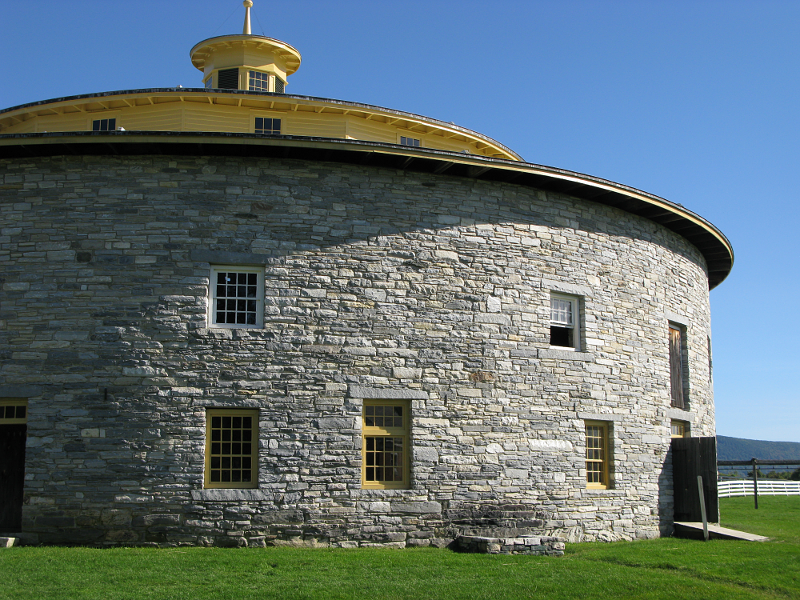
Shaker cowbarn at the Hancock Village
In September 2009, Donna and I visited the Hancock Shaker Village near Pittsfield, Massachusetts. This post is based on some notes I made at the time.

We enjoyed a wonderful holiday travelling from Boston up the coast as far as Kennebunkport, then south through the Appalachians, back up to Cape Cod, and flew home again from Boston.

Origins - The Shakers had their origin in England where they were founded in 1747 by Mother Ann Lee in the rapidly growing industrial city of Manchester. They originated as an offshoot of the Quakers, both groups being named by the public because of their sometimes ecstatic movements during worship. The early Shakers moved to the New England colonies, initially New Lebanon and Watervliet (the 'Niskayuna Shakers'). By the final years of the 18th century the Shakers were living in village communities.

Their rules included celibacy, equality of men and women, community living (men and women separately but often in the same building), and joint ownership of all property and possessions.

In 1790 the Hancock community was established and this is the village we visited. We'd recommend this open-air, living museum to anyone finding themselves near Pittsfield with a day to spare. It was a fascinating experience. The land and buildings are owned and managed by a preservation trust as a working farm and museum managed as it would have been 100 years ago. It's a beautiful museum and all the buildings and equipment are maintained to a high standard.

Shaker beliefs - The Shakers had diverged considerably from the Quakers and other followers of Jesus. For one thing, they held Ann Lee to be the female Christ, a view that is easily dismissed by studying the Bible. They also had some strange views about spiritual guidance, did a lot of shaking, and were very fond of music and dance.

One of their melodies remains well known today - 'Lord of the Dance'. You can listen to one of their other songs, 'The River of Love', on YouTube along with more photos of the Hancock Village.

Some commendable points - Despite some oddities they held to much that was good. To accept women as equal to men was extraordinary in their day. They also believed in the equality of all races, on one occasion they bought a slave simply in order to rescue him. They took him in and treated him as any other brother.

The Shakers understood that everything should be done as well as humanly possible, so as to recreate Heaven on Earth in some sense. As a result they were careful and thorough workers and their furniture, boxes, seeds, and many other products were much valued and sought after.

Unlike the Amish, they had no qualms about using modern methods. They used water power in their workshops, adopted electricity, photography, motor vehicles, and other technologies.

A warning - The Shakers are a challenge and a warning to us. They were commendably serious about their lifestyle, their morality, and their thoroughness. We might learn a lot from them in that regard. But they came off-track in terms of their theology and seeking after spiritual experiences. We need to be careful to seek only Jesus, not experiences of Jesus; we should look for spiritual fruit more than for spiritual gifts.

There's nothing wrong with spiritual experiences or spiritual gifts. But if they become the thing we put first we are in a very dangerous place indeed. The lesson is clear. Seek first his kingdom and righteousness and all the other things you need will be given to you (Matthew 6:33).

So the question then becomes, what are the things in our spiritual lives that we accept as normal, even essential, that get in the way of kingdom living? Some of them are being discussed quite widely these days. A major problem may be that we are very busy with meetings and writing blogs and reading our Bibles and living good lives so that we forget our prime directive which is, perhaps, 'Go and make disciples'. That is, after all, one part of 'seeking his kingdom'.

Note: There's a good book on Mother Ann and the Shakers by Richard Francis. It's called 'Ann the Word' gives a lot of background and history, and is very readable.

Questions:

  • Are you doing everything to the highest possible standard, like the Shakers did?
  • Are you seeking the kingdom and righteousness ahead of everything else?
  • How do you see the connection between what we believe and how we live?

See also:

04 January 2013

SOAP Bible reading

Keeping a SOAP journal may help make your Bible reading stick. Dave deVries posted about it recently and I want to share it further. Scripture-Observation-Application-Prayer (SOAP). Give it a try and see if it will help you stay spiritually fresh and clean!

Liquid and bar soapsDave deVries, writing at 'Missional Challenge' a week ago, recommended SOAP Journaling. It seems like a good idea that might help many of us read and digest the Bible more effectively, so I thought I'd pass it on.

Not only that, SOAP can help with discipling others and if you are doing that (and you should be) it's a technique you can teach them so that they in turn can teach it to others.

Like all simple ways of doing things it's easy to understand, easy to learn, easy to describe and easy to teach.

There is a caveat, however. Like all methods it's what you make of it that counts. There is no benefit or value in going through the motions; methods are tools, not an end in themselves.

So what is SOAP? How does it work? You can read about it in more detail in Dave's article. A brief outline and my own thoughts are below.

SOAP - The acronym stands for Scripture - Observation - Application - Prayer.

Begin by consciously clearing your mind. As with CO2's Virkler, one way to help with this is to jot down in your notebook every intrusive thought about things you need to do. Write things down as they occur to you and dismiss them until later.

Once your mind is clear and calm, ask the Holy Spirit to speak to you, then read the Bible passage from a version that flows easily for you. Consider what you are reading, ask the SOAP questions and write down the thoughts that occur to you.

The questions are listed in Dave's article, he provides several for each letter of the acronym.

Scripture - the questions focus on the context. When it was written, who wrote it, why they wrote it and to whom. Write down verses that speak to you strongly and personally.

Observation - Look for commands and promises. Consider anything concerning the nature and actions of the Father, Son and Spirit. What questions arise in your mind?

Application - What effect does this have, what changes are necessary, what will you do today as a result of what you have read and considered?

Prayer - Aim to cover your needs for help and forgiveness. Be thankful. Write them down as a prayer.

It's easy to read in a vague way and remember almost nothing later. Using a method like SOAP will help you lock in some of the things you read. Writing things down (or sharing them with someone else) are effective ways of getting them to stick in your own mind and heart.

SOAP is more than an acronym, it's an idea. What do you use soap for? To help release the dirt when you wash your hands, to stay fresh and clean. So remember, using SOAP regularly will help you stay spiritually fresh and clean! But as with ordinary soap it's of no value unless you use it.

Questions:

  • Are there ways you can improve your Bible reading? Might SOAP help?
  • What do you think of the SOAP questions? Can you add more of your own?
  • Have you some experience using SOAP? If so, please leave a comment below.

See also:

03 January 2013

The universe - INDEX

(See indexes on other topics)

This is the index page for a major series on the story of the universe. I'll be adding sections from time to time and provide links to all the parts below.

Where does it begin and end?I would like to attempt a major project in which I'll do my best to describe and explain the universe as we understand it in 2012 and 2013. The first part of the series is an introduction and explains why and how I am doing this.

The list below will expand as fresh parts are written. It's a story with no beginning as we cannot currently investigate the state of the universe right at the start (assuming 'the start' has any rational meaning for the universe). And it's a story with no end because it seems unlikely that the universe will have an ending in the sense of ceasing to exist.

Besides, time itself might be seen as part of the universe. In that case we would be talking about the beginning and end of time. What would that mean?

One of the truly astonishing things about the universe is that it contains tiny blobs of matter (us) that are capable, in some sense, of comprehending it. This should seem far more extraordinary than it does to most people most of the time.

Here's the list of parts so far.
  1. Introducing the universe - Why am I attempting this project?
  2. How does science work? - So, why should we accept the claims of science?
  3. In the beginning - Even time and space began at the beginning.
  4. From the beginning to atoms - Forces and particles condense from energy
  5. Penzias, Wilson and some noise - How the cosmic background was found.

Questions:

  • Do 'beginning' and 'end' in science and in religion refer to the same thing?
  • Scientific and religious - do they overlap or conflict or are they distinct?
  • What lies beyond the universe? How could we know?

See also:

02 January 2013

A list for a holy life

Colin Urquhart is the founder of Kingdom Faith, an author, and an internationally known speaker. He recently published a list of key qualities that he thinks should be found in every believer. The list focusses mainly on what we are, not what we do, though action will inevitably result.

Colin Urquhart speakingColin Urquhart has been living as a Spirit filled believer and follower of Jesus for most of his life. He is serious about his walk with Jesus.

He was a leader in the Charismatic Movement in the 1960s and 70s and has written many books, led churches, published a New Testament translation, spoken at countless meetings, runs a Bible college and has long been a pastor in Kingdom Faith which he founded.

Here is his list of fifteen key qualities that should be found in every believer. It's an interesting list, focussing on holiness and based on much personal experience. Read through it and give it some thought. Notice that the items are more about being something than about doing something. Although most of the statements begin with verbs, the sense is mostly about a state of being. For example, 'being full of praise and adoration' is not a call to action, it's an encouragement to a state of mind and spirit.

  1. Love for God that is expressed in obedience to Him. 
  2. Wholehearted consecration to His will.
  3. Living in the fear of the Lord, not wanting to grieve Him in any way.
  4. Seeking God's glory in all things.
  5. Living with complete trust and confidence in Jesus.
  6. Living at one with the Lord in the communion of His presence at all times.
  7. Living a life of watchful prayer.
  8. Being full of praise and adoration for the Lord.
  9. Diligent use of your time.
  10. Standing strong against temptation.
  11. Being devoted to a life of serving God by serving others.
  12. Walking in humility, not judgement.
  13. Living a life of self-denial, taking up your cross to follow Jesus.
  14. Keeping your eyes fixed on Jesus at all times.
  15. Being submitted to the leading of the Holy Spirit as a child of God.

It seems clear to me that Colin's whole approach is geared more to what we are than to what we do. Inevitably what we are results in doing certain things and not doing others. But the actions are results, not causes.

You can read the list on Colin's website along with his short explanation not included above. You might also find some of his audio messages interesting.


Questions:

  • What (if anything) would you add to or remove from this list? Why?
  • Which is the more fundamental, what you are or what you do?
  • Does reading this list affect your understanding of what it means to follow Jesus?
  • If you lived like this, how would it affect the things you say and the things you do?

See also:

01 January 2013

How, then, should we meet?

Alan Knox has posted a blog article about the way we meet as church. His post is not only informative and useful, it is also gentle and wise. This is very important yet often forgotten. Heated argument is not effective as a means of communication, Evidence and gentle persuasion are far better.

Alan Knox's website
I'm posting a quote from Alan Knox in the USA. I believe his message is important, partly because of what he writes and partly because of the way in which he writes it. But first, read the quote...

If the authors of the New Testament were correct (and I think they were), and if we should consider what they wrote to be important (and I think we should), then we should also recognize the importance and necessity of mutual edification whenever we get together with our brothers and sisters in Christ.

You can read Alan's full article 'Remembering the importance of mutual edification' on his blog 'Assembling of the church'.

What is Alan saying? - He's saying that when we meet together as church, what we do and how we do it are important. We would probably all agree with him on that.

But he is further saying that we don't always get it right and we should go back to the Bible to check our current practice against what we find written there. And he's saying that mutual edification comes into it. But you can read all that for yourself.

How is he saying it? - The other point I want to make is that Alan writes in a most gentle and inoffensive way. And he's right to do that. We can hardly edify one another while beating each other up with the big sticks of disagreement!

We can all learn a lesson here, perhaps me more than most. Gentleness and wisdom often go hand in hand. We are called to have the fruit of the Spirit in our lives, things like peace, patience, kindness, and gentleness. There is, Paul assures us, no law against such things as these. (1 Corinthians 13:1-13). And all of them are underpinned by love, the greatest thing in the world.

Questions:

  • How do you react to gentle persuasion and a reasoned argument?
  • How are you likely to respond to anything that seems like criticism?
  • What do you understand the Bible to say about the way we meet?

See also:

31 December 2012

Clergy and laity

Choudhrie's steps, Part 1 of 21
< No earlier items | Series index | Meet in houses >

In his first step for transforming church life, Victor Choudhrie suggests that we rewrite the job description of the professional clergy. Instead of employing professional clergy we should expect leaders to encourage the sheep to serve one another.

A shepherd and his sheep in RomaniaHere's the first of Victor Choudhrie's steps for transforming the life of the church, in his own words.

Rewrite the job description of the professional clergy from that of a pulpit orator, sacrament dispenser and tithe gatherer, to that of a shepherd who feeds his flock to be healthy and reproducing, by encouraging them to practice the priesthood of all believers with authority to baptize, break bread and equip fishers of men. He must model a flat church structure wherein brothers and sisters submit to one another, pray one for another, serve one another, exhort, forgive and love each other. John 13:34-35; Matthew18:21-22; Ephesians 5:21

There's a lot to digest, right here in step one. It is written on the assumption that the reader is currently involved in a typical western denominational church of a particularly traditional kind.

There are professional clergy, people who are paid to work as pastors or vicars or whatever they may choose to call themselves. These people have three major roles - speaking from the front, presiding over the sharing of bread and wine, and fund raising.

A change of role - Choudhrie is clear that there must be a change of role. Shepherding involves feeding, promoting health and ensuring there is active reproduction. This would be a farmer's desire for any flock of sheep and it should equally be the shepherd's desire for church sheep. So far so good, at this point those in the newer streams of church may be feeling they are doing a reasonable job of meeting that first step. Catholics and Anglicans, however, may already be having a hard time accepting some of the changes being proposed.

But there's more! Choudhrie insists that the sheep themselves must be encouraged to act as priests and to take responsibility for baptising, breaking bread, and equipping others for capturing new followers. And the members are to learn to submit to one another and themselves do the work of church leaders. This may give pause for thought to many more of us.

Probable responses - How will traditional churches receive the suggestions in step one? There are three possibilities.

  1. Some may reject the step out of hand because it goes against church tradition and denominational rules.
  2. Others may try to make adjustments to bring their current model of church more in line with the requirements of step one. They might, for example, encourage selected and trusted members of the congregation to speak from the front from time to time, or take charge of communion, or manage a home group.
  3. And some might accept step one as it stands and make fundamental changes to the way church operates.

Questions:
  • What problems do you see with each of the three responses?
  • If the sheep are to do the work themselves, is a shepherd still necessary?
  • What do you suppose Choudhrie means by a 'flat church structure'?

See also:


< No earlier items | Series index | Meet in houses >

30 December 2012

Cine film of Eaton Socon in 1939

Here is a stunning piece of colour movie film from 1939 showing some of my local landmarks, The Crown Inn and the Akbar Tandoori in Eaton Socon. The photographer drove along the Great North Road from London to Grantham, stopping to take these images on the way.


The Crown in 1939 and 2012
I recently found a YouTube video of a journey along the Great North Road from London to Grantham in August 1939.

As I live in Eaton Ford (just a few hundred metres west of the route) it was fascinating to see some local landmarks that I know well.

On the right, side by side is a still from the 1939 film and a photo taken yesterday, both show 'The Crown' in Eaton Socon. The main changes are an extension beyond the further chimney, removal of the ivy, the addition of a porch, the signs, two chimney pots and the loss of the telegraph pole.

The Akbar in 1939 and 2012
And here on the left are two further images, this time showing a tea room, now the Akbar Tandoori Restaurant.

Once again we can see some changes, but the scene is still very recognisable.

The YouTube video is shown below. It starts in London and 'The Crown' pub appears at 2 minutes, 37 seconds. This is followed by the old RAC sign for Eaton Socon, and then the tea house (now the Akbar Tandoori). The next shot shows a farmhouse beside the road near Southoe, then some open road followed by the Buckden sign and some shots in Buckden itself. After that there is a view of the Brampton Hut Hotel and then the journey moves on beyond my local area.

It would be interesting to know what camera and film were used to take these cine shots. Is it early Kodachrome brought over from the USA to record Britain just before the Second World War? Or was it a European process, perhaps Dufaycolor?


Questions:

  • How much has the area where you live changed in the last 73 years?
  • Are you aware of the local history of your town or village?

See also:

29 December 2012

Choudhrie's steps - Index

(See indexes on other topics)

Victor Choudhrie is an Indian evangelist and apostle who has baptised many people in India, planted many house churches, speaks internationally, and writes books, manuals and teaching material. He suggests twenty-one steps for transforming a traditional church.

Victor Choudhrie
Victor Choudhrie is an Indian cancer specialist turned apostle. I don't know if he would describe himself in quite that way, but I do.

He has started a movement of house church planting in India and it is spreading exponentially. He has also been invited to speak about his work in many countries and has written books and papers about it.

Listen to him speaking about how he changed from medicine to preaching Christ (there's a two minute introduction before Choudhrie speaks). The full set of six videos is well worth hearing.

One of his papers is a PDF containing twenty-one steps that he recommends for transforming the life of the church. Some of the steps have been shared on SimpleChurch Journal and briefly discussed on The assembling of the church. Victor Choudhrie describes them as 'twenty-one steps to transit from being a barren church to a millionaire of souls'. They form part of the training material on the Paul-Timothy website.

But I'd like to go further, I think it would be useful to take all twenty-one steps individually and examine them in a bit more detail. They are very striking, and extremely challenging. Are you ready?

The steps are listed below in abbreviated form and will be examined in future posts.

  1. Clergy and laity - rewrite the job description of the professional clergy
  2. Meet in houses - move from meeting in temples to houses of peace
  3. Small and informal - phase out Sunday services, gather informally
  4. Share resources - replace Mosaic tithing with Christian sharing
  5. Eat together - replace wafer-and-sip communion with agape meals
  6. Spiritual melody - replace professional music with heart music
  7. Interact and participate - not spectator-oriented but prophetic
  8. Become a network - not mega-church but meta-church
  9. Multiply - produce baby meta-churches abundantly
  10. Know who you are - be Christ's royal-priests, not laity
  11. Challenge purposeless church - clearly stated vision and a roadmap
  12. Unglue and send out - don't sit, soak and stagnate, but actively go
  13. From death to life - from titles to five-fold ministry that equips
  14. Subgroups are church - every prayer group and Bible study is church
  15. Replace goats with sheep - individuals who care for the weak and lost
  16. Simplify disciple making - gossip the gospel and multiply
  17. Training at home - no seminaries, share the truth house to house
  18. A new personal paradigm - church is where you spend your time
  19. Legacy church is secondary - see it as it is
  20. Preach Christ in new places - be fruitful and multiply
  21. Have a completion mindset - aim to be a millionaire of souls

Questions:
  • How do you react to the list of steps?
  • Does Victor Choudhrie have the right to suggest these steps to change?
  • If so, why? If not, why not?
  • What do you find most interesting or challenging about his life as a believer?

See also:

27 December 2012

Israel and Iran love one another

Remarkably, Ronny Edry has started a viral peace campaign on the internet. Initially it was 'Israel loves Iran', then 'Iran loves Israel', and now it's worldwide and growing apace. Take a look at the Facebook, Google+ and Twitter accounts. What a great idea!

Ronny Edry's Peace FactoryIsrael and Iran are at best very suspicious of one another, at worst sworn enemies. Iran would like to see Israel destroyed, Israel is considering a strike at Iran's atomic research infrastructure.

Ronny Edry started something bigger than he expected when he put up a simple poster on Facebook expressing love towards Iran.

After a while it built quite a bit of momentum with replies from people and places he didn't expect.

It's not merely that his poster has gone viral (although it has), but rather that the whole idea of loving one another has gone viral. Quite a movement!

Ronny, knowingly or unknowingly, has reiterated Christ's message to his followers to 'love your enemies' (Matthew 5:43-48). To our shame we have not always done that as we should. Well done, Eddy. And well done everyone who has taken the idea and run with it.

Watch this video of Ronny speaking at TEDx in Jaffa, Israel. It's a video you really should definitely not miss.


Questions:

  • Do you think Ronny's love movement has lasting value?
  • How many people might a viral idea like this reach?
  • Can you think of further and novel ways to contribute to Ronny's idea?
  • Is there anything greater than love? Who might you offer love to today?

See also:

21 December 2012

Law or grace?

On the one hand is law and on the other grace. Can I base my daily living on either of these? Is there any other way to live my life? We look at obedience in the life of the believer, based on Christ's love within and the actions that stem from this.


Tetrahedron
Sometimes things are not as clear as they seem.

Some followers of the Way are bound by rules and regulations; in other words they are
convinced there are standards we must meet in our lives.

Others may say they are free in Christ to do all things since he dealt with sin once and for all. Perhaps the former are in the majority although it's hard to tell.

At the absolute extremes we would be so law-focussed that we might rely on our own purity, or so grace-focussed that we might treat continuous forgiveness as our right.

It's unlikely that anyone could be found at either extreme, but some might come close. The rest of us are spread out in a continuum between law and grace. So who is right? How should we live our lives?

It doesn't often occur to us that both might be far from the simple truth.

Law - If I depend on the Law I'm like the Pharisees who criticised Jesus for allowing his followers to harvest and thresh grain on the Sabbath. As they were walking through the fields they took ears of grain and rubbed them between their hands to extract the seeds to eat (Mark 2:23-24). It was hardly an industrial-scale process! The Pharisees also prided themselves on meticulously tithing even the smallest quantities of herbs and spices like cumin (Matthew 23:23).

Meanwhile, for all their complaining about others and pride in their tithing they failed to help the poor or take pity on those in difficulty. Adherence to the law is not sufficient. Or more correctly, it would be sufficient if I had never sinned and could continue to lead a sinless life. But I haven't and I can't.

It's already far too late for me to depend upon observing the Law.

Law is a gift from the Father.

Grace - But if I look to grace am I any better off? Perhaps that depends on how I understand grace. If I see it as a precious gift it is all I need. If I treat is as a licence to sin without further consideration then I lose its true value.

Grace came at great cost, it is a precious, precious thing. It enables us to stand confident in the presence of the Most High, to see him as a loving Dad, to recognise we are forgiven, special, precious, loved, honoured and glorified by the Creator of the universe.

I dare not abuse it, I am called to receive grace as a gift but also to offer it freely, to forgive as I have been forgiven, to love as I have been loved, to honour as I have been honoured.

Grace is a gift from the Son.

Obedience - Law is too rigid. It's not the right place to look, I can never earn forgiveness and justification by obeying the Law. Yet grace (if I mistreat it) is too flexible.

But there's a third alternative, rarely considered, and it transforms everything.

Obedience is good, but obedience to the Law is impossibly hard. It is unachievable. It is already lost. However, grace opens the way, not only to forgiveness, but also to life in the presence of the King.

Jesus sent the Holy Spirit precisely so that I could hear what the Father is saying to me moment by moment as I live out my life on this Earth. So rather than a vain attempt to live by obeying the Law, I can now begin to live by obeying his voice, just as Jesus did. This is truly revolutionary!

There is nothing I am not allowed to do - as long as I'm told to do it. It's hard to see the freedom and opportunity wrapped up in this statement. Paul writes that even eating food sacrificed to an idol is OK, providing I don't cause others to sin by eating  (1 Corinthians 8:1-13). In other words my care for others trumps the law and is made possible by grace. Love wins. It's no accident that Paul judged love to be the greatest thing (1 Corinthians 13).

It's not that there are no longer any rules, but in Jesus those rules have been fulfilled and now I'm free to look away from them and focus my attention on Jesus instead. And he'll guide me by the power of the Spirit. It's just as written by Isaiah, 'This is the way, walk in it!' (Isaiah 30:19-21) and by Jeremiah to a disobedient people, 'Where the good way is, ... walk in it' (Jeremiah 6:16).

Obedience is a gift from the Spirit.

Conclusion - Everything comes from the Father, Son and Spirit. Just as they are inseparable, so too are law, grace and obedience. We cannot pick them apart, we need all three. But the amazing truth is that Jesus ministers all three to us. He is the way, the truth and the life; do you see that those three concepts have the aroma of the Father, Son and Spirit? We can lay them out here.

  • The Father provides law and has the aroma of the truth.
  • The Son provides grace and has the aroma of life.
  • The Spirit provides obedience and has the aroma of the way.

But because they are one, you can mix and match and every statement you make remains correct. The Father, Son and Spirit are all about law, grace and obedience and all have the aroma of way, truth and life. There is a wonderful symmetry about the great Creator King, a multidimensional knot that holds the universe together and cannot be unpicked.

As an aside, the tetrahedron is an interesting geometric shape in three dimensions. There is a base (think of it as the universe or the world). High above is an apex, think of this as the Almighty. There are three faces (Father, Son, Spirit), three edges connecting the apex and the base (law, grace and obedience) and the base has three sides (way, truth and life).

The law had to be fulfilled and Jesus does that. Grace is sufficient for me and Jesus provides it. Life needs to be lived and Jesus shines a spiritual light onto my path. He is all in all. Jesus says, 'If you have seen me you have seen the Father'.

Jesus came to set me free. And I am free indeed! But he set me free to obey him in everything.

Questions:

  • How large a part should traditions have in church life?
  • What does it mean to be 'free indeed'? (John 8:36)
  • Is Jesus the way, the truth and the life for you, personally and daily? (John 14:6)

See also:

14 December 2012

Season's greetings

Greetings to all my readers. This is a time to remember warm sunshine and abundant greenery, to enjoy the glitter of frost and the crunchy feel of frozen grass, and look forward to the return of flowers and warm weather. The King is here in all of it.

Hoar frost on a shoot
For years I've struggled with the Christmas season. Like all the traditional 'Christian' festivals there are many pagan elements involved and I'm not happy to be associated with those.

On the other hand I don't want to be a big disappointment to my wife, friends, daughters, or grandchildren. I have no wish to spoil anyone's fun.

In the end I've developed a workable compromise. I don't initiate any of the things that trouble me, but if other people want to do them I try to be gracious and not stand in the way or make a fuss. Between these two extremes is a place that is sometimes difficult, where I must choose between helping with something I'm uncomfortable with or not helping and risking disappointing people. Even here, I can often find an alternative, something to do that will help without directly involving me in the thing I'm uncomfortable about.

Greetings - But Christmas cards remain a difficulty. This year I'm going to send out greetings electronically wherever possible and this blog post is one means of doing that. I'll be working out how much money I save by not buying and posting cards, and will give it to a charity instead.

So what kind of greetings should I send you? Not Christmas greetings, for sure! Winter greetings, then. How about this gallery of frosty scenes? They were all taken in St Neots where I live. Hint: click the play button at upper left.

You might also like to listen to 'Winter' from Vivaldi's 'Four Seasons'. Along with the photos and the music, please accept a winter greeting from me at a time of year when (unless you live in the southern hemisphere) the days are short and often cold and the nights are long and even colder. Summer is far behind us, yet it also beckons from the year ahead, warmth, long days, flowers and vivid green leaves turning the countryside into a garden fit for a king.

Emmanuel - Fit, actually, for the King. Everything is so beautiful. That's because it contains the essence of the King himself. Creation contains the stamp of authenticity, the mark of its maker. Just look at the beauty of a frozen landscape, could anything be more beautiful? Could it? Well, maybe. Yet all things are beautiful and glorious with the beauty and glory of the King of kings.

He is here, in this season, in every season.

May he also rest in your heart in love. May you know him and receive him just as he knows and receives you. He is the beginning, the centre, and the end. He is all you need.

Questions:

  • What do you most like about the season of winter?
  • Have you ever wondered why fog freezes mostly on the edges and ends of leaves?
  • Which of the photos is your favourite?

See also:

12 December 2012

Death of a nurse

The tragic death of a nurse following a prank phone call from Australia should make us all think about how we deal with other people and how we respond when hurt. We can only behave as we should if we have hearts that are full of love for others.

Most people will have heard about the tragic death of Jacintha Saldanha, the nurse involved in the hoax phone call to the London Hospital treating the Duchess of Cambridge.

Amidst all the media activity and comment, maybe it's time to take a look at what happened and consider how we should respond.

The bare facts are quite straightforward. Mel Greig and Michael Christian are radio hosts working for an Australian station, 2Day FM. They decided it would be fun to phone the hospital pretending to be Prince Charles and the Queen asking for an update on Kate's condition, and were quite surprised when Jacintha took the call and put them through to the ward nurse.

The nurse on duty answered their questions. Later, when the news of the incident reached the hospital and Jacintha realised what she had done, I can only assume she must have been horrified, very, very embarrassed and upset. Later, she tragically committed suicide leaving her husband and children bereft of a loving wife and mother.

The suffering - Jacintha's family, her friends and colleagues, the hospital management, the Duke and Duchess and their families are all suffering some level of distress as a result. When news of the suicide reached Mel and Michael they, in turn, were dreadfully upset at what had happened.

Something that began as a prank has turned into a nightmare for so many people. Who should we feel most sorry for? Frankly, I feel sorry for almost everyone involved including Mel and Michael. What they did was foolish and unkind, but clearly not intended to cause a death. However, I have little sympathy for the management of the radio station.

It seems there have been previous incidents for which the station has been criticised (this is the fourth such event mentioned in the Wikipedia article about the station). But it's clear that listener ratings and company profits were once again put before caring behaviour and ethical procedures.

The company's CEO, Rhys Holleran, had the audacity to say it was not possible to foresee the suicide. That is true, but hardly relevant. It's a shameful failure to take responsibility. What was perfectly foreseeable is that any prank of this nature is certain to cause very serious embarrassment and distress. Isn't that the whole point? Embarrassment and distress amuse and excite audiences, keeping ratings and profits high. The station is now going to review its operating procedures, but changes should surely have been made when they were criticised for similar behaviour in the past.

What should happen now? - As a bare minimum Jacintha's family need immediate financial support to cover the costs of counselling, loss of income, and to cover whatever extra facilities are necessary for the family to function in her absence. Additionally there will be a need for significant compensation. A wife and a mother cannot be replaced, of course, nor can the lifetime experiences that she has lost.

It seems to me right and fair that the radio station should be required to meet all these costs as a bare minimum. And they need to change their standards of behaviour or face closure. I'm glad to hear that the radio station does plan to offer some financial help. This is to their credit, but should not prejudice any independent rulings on compensation or operating standards.

The hospital is also raising an appeal for Jacintha's family. They are not guilty of doing anything wrong, but it's possible their handling of incoming phone calls could be improved in some way, especially out of hours. They are looking into this.

What can we learn from this tragedy? - Surely the fundamental lesson is that we must always treat people with kindness. Deliberately embarrassing and distressing people, whether for commercial gain or for any other reason is simply not the right way to behave.

Paul, writing to the Ephesians almost 2000 years ago makes it very clear. He writes that 'the fruit of the [Holy] Spirit is love, joy, peace, patience, kindness, goodness, faithfulness, gentleness and self control'. There is, he writes, no law against such things. (Galatians 5:22-23)

I hope that Mel and Michael will recover from their shock, grief and sorrow. Their lives will be changed by what has happened, hopefully they will warn others of the dangers of treating people unkindly. The worst thing that could happen now is for anyone else to be harmed. My prayer for Mel and Michael is that they will find the strength to endure this difficult time and to move on, not forgetting what has happened but learning from it. The same prayer goes out for all the managers and staff of the radio station.

My prayer for everyone else is that they will be able to forgive. A world without Jacintha is a poorer world, especially for those who knew her. Sorrow and grief are inevitable, nothing can bring her back, the only way is forward. They will all need time, courage and strength to take those forward steps. Father, bless them as only you know how - in Jesus' name.

Love - But what we all need in this amazing rainbow world of technology, war, natural beauty, knowledge, suffering, joy and wisdom is more love. Love for one another, love of what is good, endless love, love that never gives up, love that always hopes and believes the best. Only the heart of love can forgive and bless.

Here's Paul again (1 Corinthians 13:4-8).

Love is patient, love is kind. It does not envy, it does not boast, it is not proud. It does not dishonour others, it is not self-seeking, it is not easily angered, it keeps no record of wrongs. Love does not delight in evil but rejoices with the truth. It always protects, always trusts, always hopes, always perseveres.

Love never fails.

Consider reading what the Scot, Henry Drummond, wrote about love in his amazing essay 'The Greatest Thing in the World'. Love is the one thing we need, both to give and to receive. We can't manage this, only Jesus can provide it. He is the source of love, both to give and to receive. Learn more about him from the seven signs in John.

If even one person learns about love something good will have come from this desperately regrettable incident.


Questions:

  • How do you think the radio station might have prevented this?
  • How do you think the hospital might have prevented this?
  • Are you always guided by love in your dealings with other people?
  • How do you measure up to the standard Paul set out? How will you get help?

See also:

11 December 2012

Introducing the universe

The universe, Part 1
< No earlier items | Series index | How does science work? >

This is the first post in a series on the story of the universe, insofar as we know it in the first eighth of the twenty-first century. In this introduction I provide a little background about my reasons for tackling this subject and my own training and experience in science.

The Hubble extreme deep field view
I have a new project, and this post is the very first part of it. What I'd like to attempt is a sweeping review of the development of the entire universe, from the earliest moments right up to the present. It goes without saying that this is a rather ambitious task.

Why would I want to do this? - There are several reasons. One is the current battle of ideas between science on the one hand and people who think they know better on the other. And here I include creationists, the detractors of the evidence for global warming, deniers of human causes of global warming, those who are anxious about the side effects of inoculations and all sorts of other groups denying that scientific understanding of this or that topic is correct. I'll refer to these disparate groups as deniers and disbelievers (DDs).

DDs have a variety of reasons for their views. Some are genuinely concerned that science has a wrong view that is dangerous or harmful. Others may have some kind of hidden agenda. DDs of both kinds can be extraordinarily resistant to logical argument. Some (a small minority) can be manipulative and a few have been abusive.

Another reason is simply to share what are to me profound and amazing truths about the nature of existence. When you see something astonishing and beautiful, don't you want to share it with others?

Fun along the way - I have a scientific background (I was a professional biologist for many years) and I enjoy explaining things. I don't know a whole lot about fields other than my specialist area of biology, but I do have a science education and I possess the basic tools needed to understand scientific arguments and the principles by which science progresses.

I expect we can have a lot of fun along the way. Get ready for some amazing images and videos. Prepare to meet some extraordinary characters. And don't be surprised if some of the things we see are truly beautiful and awe inspiring - that's the way the universe is. To see some of these now, click on the photo of distant galaxies for a more detailed view, and take a look at the scale of the universe, an interactive journey up and down from the scale of our normal environment.

Not all my blog posts will be devoted to this journey of discovery. They'll be interspersed with much else besides - all the other topics I've posted on in the past. But every so often I plan to slip in another post in this series on the story of the universe. I'll link the posts together so you can easily browse back and forth between them, and there's an index to help you jump straight to a particular topic.

Questions:

  • Broadly speaking, is your inclination to trust or distrust science and scientists?
  • Do you find the natural world beautiful, perplexing, and thought provoking?
  • In your opinion, does the existence of the universe demand an ultimate cause?
  • If not, would you say it's enough to assume that there is no cause?

See also:


< No earlier itemsSeries index | How does science work? >

Copyright

Creative Commons Licence

© 2002-2022, Chris J Jefferies

This work is licensed under a Creative Commons Attribution-ShareAlike 3.0 Unported License. A link to the relevant article on this site is sufficient attribution. If you print the material please include the URL. Thanks! Click through photos for larger versions. Images from Wikimedia Commons will then display the original copyright information.
Real Time Web Analytics